When the Yoga That Used to Work… Doesn’t
There’s a yoga class I still think about.
Not because it was beautiful.
Not because I nailed the poses.
Not because I left feeling particularly calm or accomplished.
I think about it because it quietly changed the way I understand yoga.
And lately, as yoga becomes more optimized, aestheticized, and performance-oriented that class feels more relevant than ever.
It was 2016, during my yoga teacher training in Koh Samui.
The room was unfamiliar. Hot. Humid. The air thick.
There were more people than I was used to. Mats closer together than I liked.
And within the first few minutes, I felt it.
My body tightening. My breath getting shallow. And that familiar urge to push through and just get on with it.
I remember thinking, this isn’t a great practice.
And honestly, that’s usually where the story ends.
You override the discomfort. Lower your expectations, and do your best and move on.
But that day, I didn’t.
Instead of fixing my breath, I noticed how it changed in the heat.
Instead of forcing relaxation, I felt where I was bracing.
Instead of judging the room, I let myself register how it was affecting me.
Nothing dramatic shifted.
But I stayed.
And somewhere near the end of class, something quietly important became clear.
Yoga wasn’t happening inside my body that day.
It was happening between my body and everything else.
The heat.
The space.
The proximity of other people.
My own impulse to control the experience.
For the first time, yoga felt less like something I was performing — and more like something I was in relationship with.
Yoga as relationship, not performance
That class taught me more than a hundred “good” practices ever had.
Not because it fixed anything. But because it showed me that yoga isn’t just about what you do on the mat.
It’s about relationship.
How you relate to your body when it feels different than you hoped.
How you relate to your breath when it won’t settle.
How you relate to the space when it’s uncomfortable, unfamiliar, or "imperfect".
The environment was doing as much teaching as the practice itself.
The floor.
The sound.
The proximity of other bodies.
The feeling of being watched… or alone… or held.
None of it was neutral.
And yet, most modern yoga spaces treat environment as background noise, something to override rather than include.
That’s where I think we’ve gone off track.
What most yoga culture gets wrong
So much of yoga today is framed around achievement.
Deeper stretch.
Stronger pose.
Calmer nervous system.
Better version of yourself.
None of that is inherently wrong.
But it quietly teaches something else:
that yoga is something we do to our bodies, something we apply, optimize, or manage, rather than something that emerges through relationship.
And for a long time, that approach works.
Until it doesn’t.
Because eventually the body stops responding to force the way it once did. And in midlife, effort doesn’t disappear, it just stops being the primary language the body understands.
The nervous system becomes more sensitive to context.
To sound.
To pace.
To pressure.
To whether it feels listened to or overridden.
The practices you once loved start to feel… off.
So when a practice that once felt grounding starts to feel flat, irritating, or strangely distant, it’s easy to assume motivation is the problem.
But more often, it’s relationship.
The body isn’t asking for more willpower. It’s simply asking for a different way of being met.
And when yoga stays stuck in performance mode, it misses that request entirely.
You’re never practicing in a vacuum
When you step onto a yoga mat, you’re not entering a sealed container. You’re entering a relationship.
Between you and gravity.
You and your breath.
You and the room.
You and whoever else happens to be there.
Rod Stryker often talks about yoga as cultivating a relationship with the life force that animates us.
And even when you practice alone, you’re still in conversation.
The wall gives feedback.
The ground responds.
The air changes how breathing feels.
Your nervous system is reading all of it, long before the mind catches up.
And yet, most yoga spaces treat environment as background, something to overcome rather than include.
Too hot? Breathe through it.
Too crowded? Focus inward.
Too stimulating? Try harder to relax.
But midlife bodies don’t respond well to being overridden. They respond to being acknowledged.
When environment is included as part of the practice, rather than treated as a distraction, yoga becomes less about controlling internal experience and more about staying present within real conditions. Not ideal ones. Actual ones.
That’s when practice stops being an escape from life and starts becoming a way to relate to it.
What yoga students are actually practicing
I hear this shift reflected back to me all the time.
Students say things like:
“I came for flexibility, but what surprised me was how safe it felt to explore discomfort.”
“Yoga became something deeply personal, not just physical, but internal.”
“It feels like home. A place I can come when everything feels crowded.”
“The practice changed when I stopped chasing poses and started trusting my body.”
This is the relationship people are actually practicing. Not with a pose. But with themselves.
Why this matters more in midlife
There’s a moment most women don’t talk about. Nothing you can point to and say, there, that’s when it happened.
You just leave a class one day and realize…That didn’t give me what it used to.
Same room.
Same teacher.
Same practice you’ve done for years.
But your body feels distant. A little dull. A little annoyed.
And you assume, of course you do that the answer is to try harder next time.
You hold the pose a bit longer. You push through the fatigue. You ignore the small signals because that’s what you’ve always done.
But something’s different now.
The body doesn’t reward effort the way it used to.
It doesn’t respond to force.
It doesn’t negotiate.
Instead, it goes quiet… or loud… or heavy… or strangely absent.
But midlife isn’t a motivation problem. It’s a context shift.
Hormones change the way tissues respond.
Sleep changes the way recovery works.
Stress lands differently in the nervous system.
And suddenly the yoga that once felt like home feels… indifferent. Not bad. Just no longer in relationship. That’s the part that disappoints, not the stiffness, not the fatigue, but the sense that something familiar stopped meeting you back.
I like to think of it as information, your body’s way of crying to be listened to.
And yoga, when it’s taught as relationship rather than performance, becomes one of the few places where that conversation can actually happen.
Not by doing less or more.
But by doing differently.
That’s why I still think about that class in Koh Samui.
Not because it fixed anything.
But because it showed me that when the old rules stop working, the answer isn’t to double down. It’s to change the relationship.
If this resonates, thank you for staying with it.
I send real-talk yoga to your inbox for women in midlife, focused on changing bodies, nervous systems, and practices that no longer respond to pushing through.
If you want yoga that adapts to you, not the other way around, you’re in the right place.
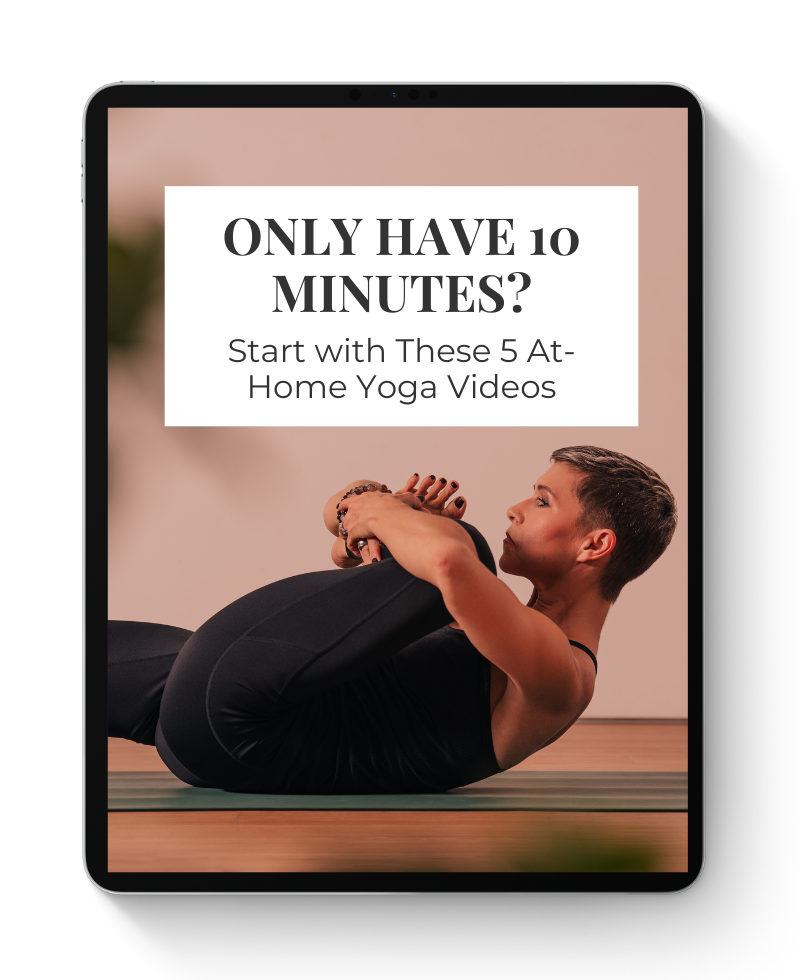
A Free Set of Short Yoga Videos You Can Come Back To When You Just Need a Minute
Nothing to keep up with, just something supportive to reach for when you need a moment.
sit and breathe
loosen up those tight hips or shoulders
move your body without overdoing it
or reset after a long day
✨ “I’m in a busy full-time job, with teenagers and very limited free time. I needed something just for me, something that helped me relax without feeling pressured or ‘not good enough.’ The breathing and quiet time made a huge difference. It helped me sleep better and reset my nervous system. I always finish feeling calmer and more comfortable in my body.”
— M.M., UK
You choose the day. You choose the video. You decide how much time you want to give it.