Stretching isn’t bad. But it’s also not the fix for everything.
"Reading isn’t just about consuming information. It’s an act of thinking. The magic is in the processing and the reflecting. The notes. The conversation you have in your head and on the page. When we read long-form content, our brains engage in focused, deliberate thought. When we scroll, we fragment our attention. And over time, that becomes the default way our brain thinks..." — Steve Magness
Let’s go on record.
Stretching isn’t bad. But it’s also not the fix for everything.
And if you’ve ever found yourself stretching consistently, doing all the *right* things, and still feeling tight, stuck, or oddly uncomfortable… you’re in good company.
This comes up a lot in yoga and mobility work, especially with poses that look like stretches but don’t actually behave that way in the body.
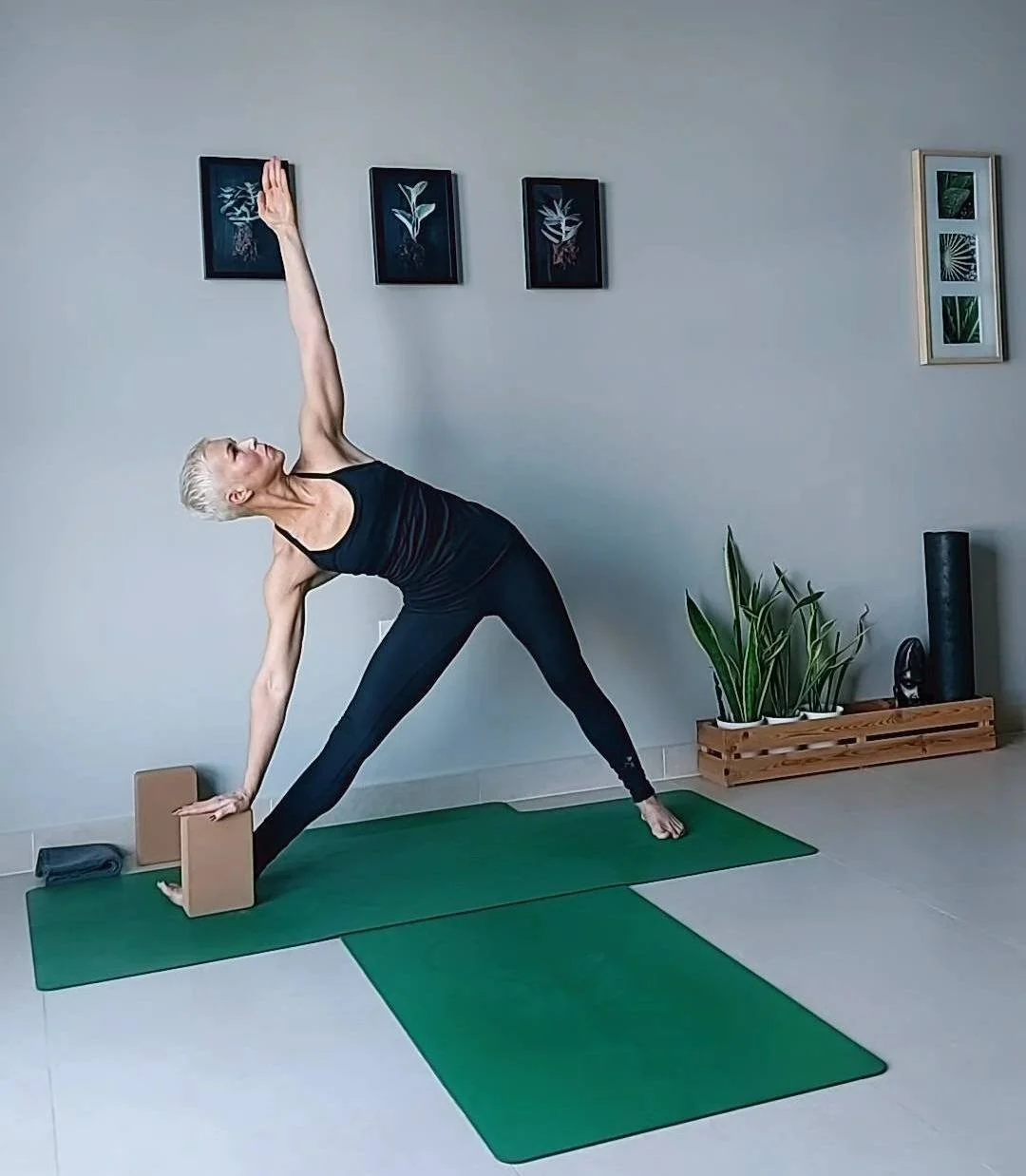
Triangle pose is a classic example.
It’s usually taught as a hamstring stretch. Reach farther. Fold deeper. Let gravity do the work.
But biomechanically, that’s not really what’s going on.
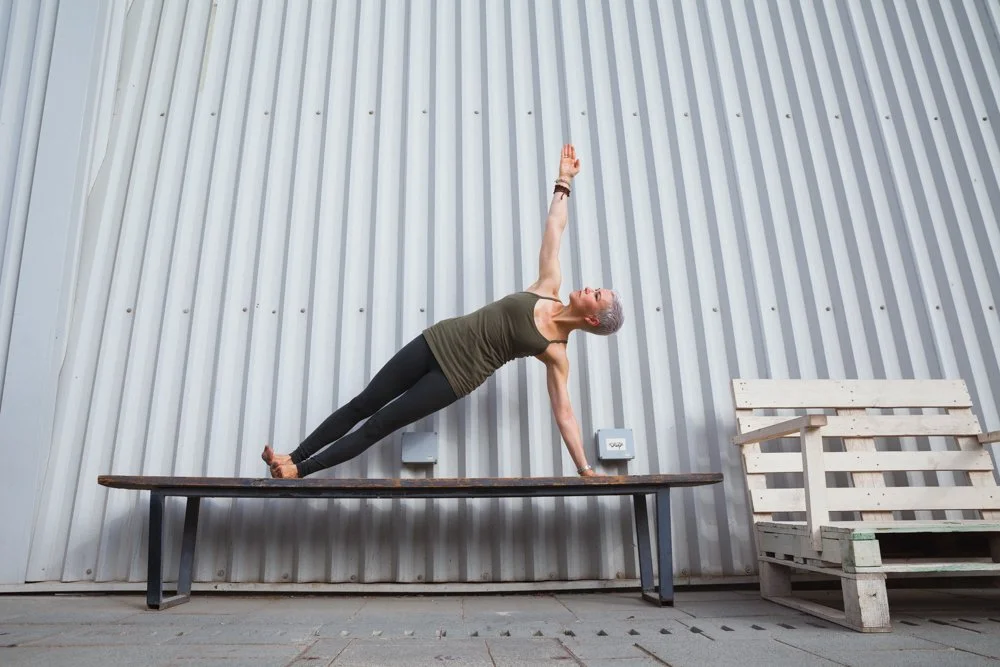
💡 Triangle acts much more like a side plank than a passive stretch.
Your body isn’t relaxing into the shape; it’s organizing to hold it.
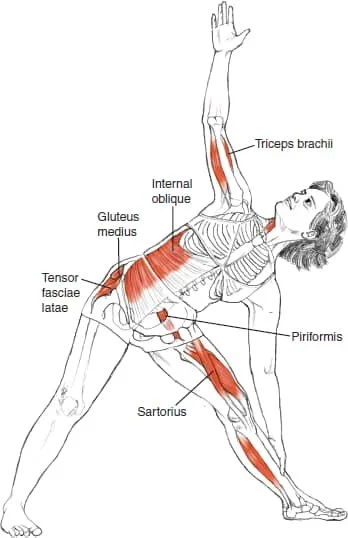
✓ Your obliques are working to keep you from tipping over.
✓ Your glute med is stabilizing the hip so the knee doesn’t wander.
✓ Your trunk muscles are managing rotation and load at the end of your range.
That’s isometric strength.
Which explains a lot.
If triangle feels surprisingly demanding…
If it feels shaky, effortful, or waaaay more *work* than expected…
That’s not a sign you’re missing flexibility.
It’s a sign the yoga pose is asking for strength and control.
And here’s where most people get tripped up.
Not every limitation is a flexibility issue
When a movement feels restricted, one {or more} of these things is usually at play 👇👇
muscle length or tissue tolerance
strength or control at end range
joint structure or bone shape
Stretching really only addresses the first one. (Magnusson & McHugh, 2007)
But it’s often the only tool people reach for. 🤷♀️🤔
Which is why you’ll hear things like, “I stretch all the time and nothing changes.”
That’s not resistance or lack of effort.
It’s just a mismatch between the problem and the solution.
If you’re in your why-does-my-body-feel-different era, this hits differently.
Because hormonal shifts affect how you recover, how much load you tolerate, and even what “tight” actually feels like. So sometimes it’s not that you need more stretching. It’s that your body needs a different strategy.
I write about this in my newsletter — practical yoga that fits the body you have now. If that’s something you want more of, you can join me here.✊🏼✨
When stretching actually earns its keep
Stretching tends to help when the limitation is muscular and your nervous system is comfortable letting you go there.
Think:
⚡ hamstrings that shorten after long days of sitting
⚡ calves that haven’t been loaded much
⚡ muscles that simply haven’t seen full range in a while
In those cases, slow stretching, especially when paired with breathing, *can increase* tolerance and ease.
A lot of the flexibility changes people feel come less from “lengthening” tissue and more from the nervous system deciding the position is safe enough to allow.
That matters. And it’s useful.
When stretching doesn’t move the needle
Stretching is far less helpful when the issue is control. (Behm et al., 2016)
If your body doesn’t feel supported in a position, it’ll put the brakes on range whether you like it or not.
That’s not defiance. That’s self-preservation.
Triangle fits here again. People feel effort, assume tightness, and try to soften more. But the pose is actually asking for stability.
So instead of feeling easier, it just feels… frustrating.
More stretch doesn’t fix a lack of strength.
The structural piece we tend to gloss over
Then there’s anatomy.
Hip shape.
Socket depth.
Femur {AKA thigh bone} orientation.
There’s a wide range of normal here, and it has real consequences for movements like forward folds.
⚠️ Some people run into bone-on-bone contact earlier in hip flexion, and NO amount of hamstring stretching changes that. (Ganz et al., 2003)
This is often where students start questioning themselves, why a fold never quite opens up, even with consistent practice.
In reality, your body might already be doing exactly what it needs to do.
Why defaulting to “stretch more” backfires
When stretching becomes the go-to answer, it’s easy to start pushing past signals instead of listening to them.
Depth becomes the goal, and sensation becomes the metric {and it's also when low backs and hip stuff tend to show up.}
A more useful question is usually simpler:
“What would make this feel more supported?”
Sometimes that means backing off depth.
Sometimes it means building strength elsewhere.
Sometimes it means slowing the whole thing down.
And yes, sometimes stretching is the right call.
It depends. And that’s not wishy-washy; it’s honest.
The bigger takeaway
Stretching in yoga is a tool.
A helpful one, when it fits the job. A frustrating one, when it doesn’t.
Triangle pose isn’t meant to feel passive. As a matter of fact, *a lot of yoga poses* aren’t.
They’re stability challenges.
Strength holds.
Opportunities to build control at the edges of your range.
If something feels hard, it’s worth getting curious before assuming you need to push or fix anything.
Often, your body isn’t asking for more effort. It’s asking for better support.
That’s a much more workable place to start.
References:
Magnusson & McHugh (2007) – Stretch tolerance vs tissue length
Ganz et al. (2003) – Hip joint mechanics and impingement
Behm et al. (2016) – Acute effects of stretching on performance and control