Yoga + Brain Health
There are certain seasons of life that quietly bring people to mind.
This one has me thinking about my dad. He was diagnosed with Alzheimer’s in his late sixties. When we finally received the diagnosis, the doctors explained that the disease had likely been present for years, possibly beginning in his early fifties.
By the time we had clarity, it wasn’t new. It had been shaping his brain quietly, long before we had words for it. Later, when he moved into full-time care, I noticed something every time I visited.
For every man on that floor, there were five women. A 5:1 ratio.
At first, it felt like a strange coincidence. Over time, it started to make a lot more sense.
Why women’s brains are affected differently
Women lose two hormones that play an important protective role in the brain: estrogen and progesterone.
These aren’t just reproductive hormones. They directly influence how the brain functions.
Estrogen helps the brain use key mood and focus chemicals more efficiently. It supports serotonin, which contributes to emotional steadiness, and dopamine, which plays a role in motivation, focus, and mental flexibility.
In simple terms, estrogen helps the brain think clearly and adapt.
As estrogen levels decline, these systems don’t stop working. They just become less efficient.
Progesterone supports the nervous system in a different way. It has a naturally calming effect, helping the brain shift out of stress and into rest.
When progesterone is well supported, sleep tends to come more easily, emotions feel steadier, and recovery from stress happens faster.
When progesterone fluctuates or declines, that settling process can take longer.
The nervous system stays “on” more than it needs to. That can show up as trouble sleeping, increased emotional reactivity, or a harder time winding down.
Over decades, estrogen and progesterone quietly buffer the brain. As they decline, particularly during perimenopause and menopause, the brain doesn’t suddenly fail. But it does lose some of that built-in protection.
That context matters.
Not to alarm anyone, but to understand why supporting brain and nervous system health becomes more important with age, not less.
Where yoga and meditation come in
This is where the research around yoga and meditation gets interesting.
Several studies have found that consistent yoga and meditation practices are associated with greater gray matter volume in areas of the brain involved in memory, emotional regulation, and executive function.
One study showed that just 8x weeks of daily breathing and meditation was associated with:
reduced inflammation
improved mood
improved memory scores
This isn’t a cure. And it isn’t a guarantee. But it is meaningful support. The takeaway here isn’t that you need to overhaul your life.
It’s that small inputs, done consistently, can support the nervous system in ways that add up over time.
The brain takes its cues from what we do repeatedly. Slow breathing, gentle movement, and stillness send a clear message: there’s no immediate threat here. Over time, that message changes how the brain responds to stress.
Movement isn’t the only input
Yoga and meditation aren’t working in isolation. The brain is also deeply affected by how, and what, it’s fueled.
In midlife, blood sugar swings, longer gaps between meals, or practicing on an empty tank can amplify brain fog, irritability, and that wired-but-tired feeling many women recognize.
Not because you’re doing anything wrong, but because the brain becomes less tolerant of stress as hormonal buffering changes.
Alongside timing, certain foods consistently show up in brain-health research because they support blood flow, reduce inflammation, and help protect brain cells over time; things like omega-3-rich fish, eggs, leafy greens, berries, nuts, and healthy fats.
This isn’t about eating perfectly or following a brain-boosting plan.
It’s about avoiding big gaps, big crashes, and unnecessary stress on a system that already has less hormonal backup than it used to.
If you’ve ever wondered whether eating before yoga helps or hurts your focus and energy, I break that down, HERE - Should You Eat Before Yoga? without rigid rules, and without pretending there’s one right answer for every body.

If You Want Support That Matches the Season You’re In…
I send a weekly(ish) letter for women in their 40s, 50s, 60s and beyond who want a yoga practice that actually supports the season they’re in.
Together, we explore what’s outdated in the yoga world, what’s actually helpful now, and how to move through practice in a way that feels steady, strengthening, and sustainable.
If you want support that honors your body as it is, not as it once was or as the industry says it should be, this is a good place to begin.
A few simple places to start
Think of this less as something to add, and more as giving your system regular chances to slow down. That matters more as hormonal support changes.
These are a few practices I return to again and again.
Seated, breath-based meditation (10–12 minutes): This isn’t about trying to quiet your thoughts. It’s about learning how to stay with your attention a little longer, so your system doesn’t default to stress as quickly.
Sit comfortably, on a chair or the floor.
Let your spine be upright but not rigid.
Rest your hands where they’re comfortable.
Close your eyes or soften your gaze.
Bring your attention to the breath. Notice the inhale. Notice the exhale.
When your mind wanders, and it will, gently return to the next breath. That returning is the practice. Set a timer for 10–12 minutes.
If you prefer guidance, I’ve recorded a short seated meditation you can follow. Click HEREto get started.
2. Sitali breath (cooling, regulating breathing): This breath is especially helpful if you feel overheated, irritable, emotionally flooded, or mentally “too on.”
Roll your tongue lengthwise.
If that’s not accessible, simply part your lips and inhale through the mouth, letting the air pass over the tongue and teeth.
The inhale should feel cool.
Exhale through the nose.
Repeat for 6–10 rounds.
It’s a simple way to take the edge off, without shutting yourself down.
3. A short grounding stretch (about 10 minutes): Gentle, supported movement helps reduce physical bracing. When the body isn’t working as hard, the nervous system gets a clear signal that it can settle.
Over time, this kind of low-demand movement helps reduce stress reactivity and supports the brain systems involved in focus and emotional regulation.
A final note
If any of this resonated, take it as information, not a mandate. These practices aren’t about fixing anything. They’re about reducing load and giving your brain and nervous system the conditions they already know how to respond to.
Often, it’s the small, steady things that matter most over time.
You don’t need to do more. You don’t need to push harder. You just need support that matches the season you’re in.
If this landed for you, here’s the part that matters:
Midlife isn’t the time to ignore your nervous system or “push through” the signals your body is giving you. It’s the time to work with it.
You don’t need longer sessions.
You don’t need intensity.
And you don’t need to prove anything to your practice.
What actually helps now is consistent, low-demand movement and breath, the kind that tells your brain and nervous system they’re supported, not under threat. That’s exactly what this next step is designed to do.
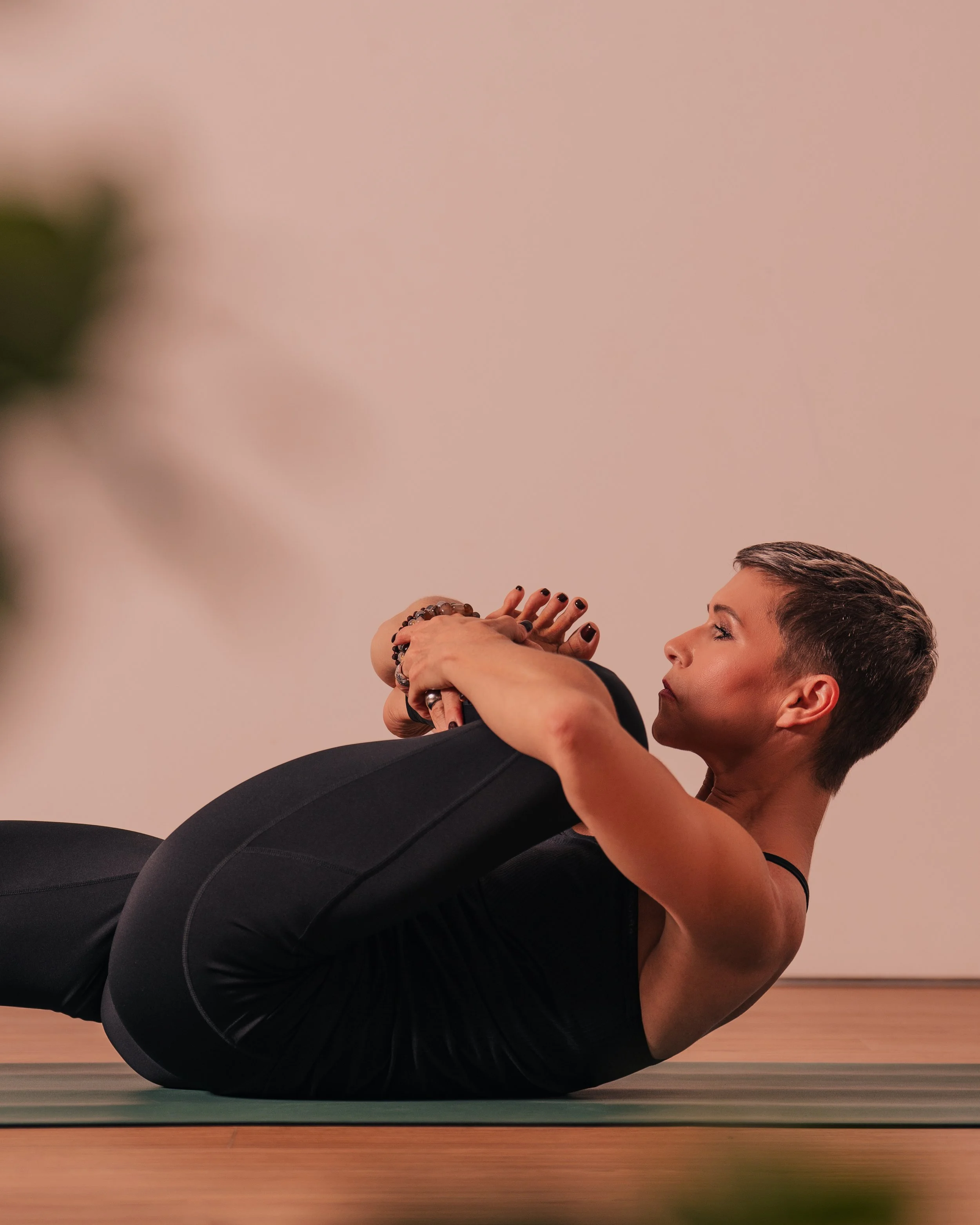
A Free Mini Yoga Series for Women 40+
This is a short, supportive yoga series for women who feel:
stiff or sluggish
mentally tired or wired-but-exhausted
a little disconnected from their body
unsure where to start again
They’re short — 10 to 15 minutes. Nothing fancy or performative. Just enough movement and breath to help things settle.
You don’t need to be flexible. You don’t need a perfect setup. And missing a day isn’t a problem, you just come back to it.
This is yoga that actually supports your nervous system and your body, in this phase of life.