What Actually Builds Strength in Midlife?
{Psssst... you are not going to find it in your mainstream yoga classes}
The day my body stopped cooperating. I unrolled my mat the way I had hundreds of times before. Stood at the top of it. Took a breath.
And then …
My hips clicked when I moved into the first twist. Not a crack. A hard sounding click. The kind that makes you go still for a second and think... wtf?
I was 43.
I kept practicing. Kept showing up at the same time, doing the same things, expecting the same things.
And for a while I told myself it was just a phase. That I needed to hydrate more, or stress less, or maybe I needed a different pillow. I explained it away with everything I could reach for.
The instability however stayed. And somewhere underneath all the explaining, I knew something had actually changed. Not temporarily. And not in a way a rest day was going to fix.
There’s a version of yoga that gets sold to women in midlife that I’ve come to think of as the soft landing. Gentle flows in candlelight rooms with a lot of language about surrender.
And I understand the appeal.
When your body has started doing things you didn’t ask it to do, when you’re tired in ways that feel bigger than tired, something that promises ease makes complete sense.
But here's what I found when I finally stopped pushing and started actually paying attention.
Ease wasn't what my body needed. Understanding was. Those are not the same thing.

the nervous system
The first thing I had to learn was about the nervous system.
Which sounds like something you’d read in a research paper and then promptly forget. But it showed up in the most practical way.
I was holding a pose I’d held a thousand times. And I noticed, for what felt like the first time, that I was bracing.
Not working. Bracing. Shoulders tight, jaw tight, the quiet physical language of a body that doesn’t feel safe.
^^^ Judith Hanson Lasater has spent decades pointing to this. So has Tiffany Cruikshank, from a different angle.
The through-line between them is simple: your muscles don't work independently. They're run by your nervous system.
And if your system has decided you're under threat, it will tighten and protect you whether you want it to or not.
The edge of a stretch is the easiest place to see this.
Your body resists. Yet you stay there without forcing. And then, slowly, something gives... not because you pushed through it but because the threat level dropped.
I had spent years pushing through it. I had gotten nowhere near as far as I thought.
Rest was the second thing. And I'll be honest, it was the hardest one to actually accept.
Not because I didn't believe in it.
But because rest, in the middle of a life with a lot of moving parts, feels like something you earn. Something you get to after everything else is handled.
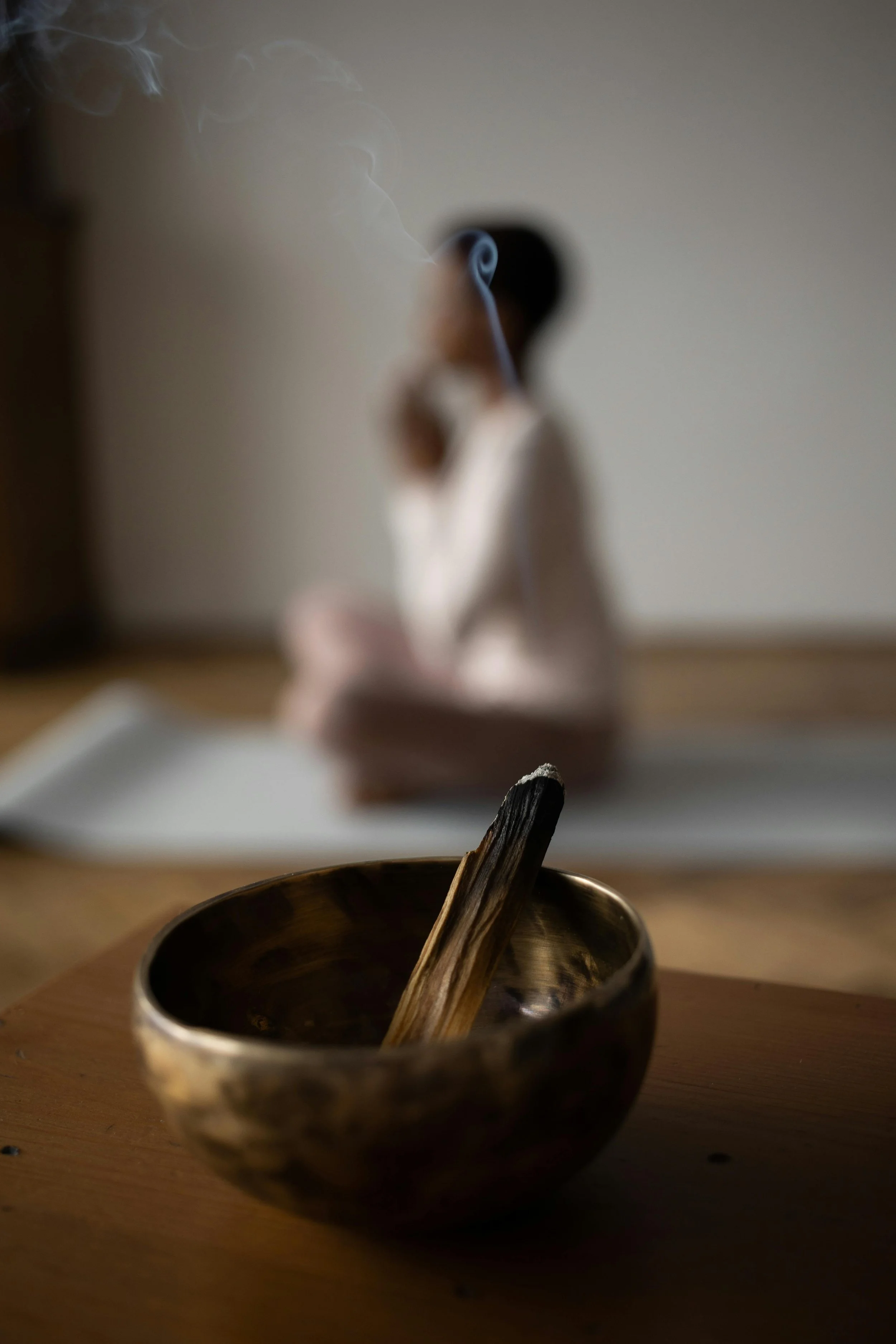
2. rest
What I didn't understand then, and do now, is that strength doesn't happen during the effort.
It happens after.
Your body processes the load, repairs what needs repairing, and comes back a little more capable.
Skip that window and you're not building anything. You're just accumulating fatigue and calling it a practice.
Most women I work with are already running behind before they ever get to their mat.
The demands are real.
The sleep is lighter than it used to be.
The hormonal shifts that nobody sat them down to explain are doing quiet work in the background.
Their bodies are managing a lot.
When I started treating recovery the way I treated the active part of practice, things started to change.
Ten minutes on your back with your knees soft and nothing to manage is not a reward for effort. It's where the effort actually lands.

3. challenge
The third thing took me longer to sit with, because it cuts against the gentle yoga messaging and I wasn't sure at first whether I agreed.
Your body still needs to be challenged.
Not pushed past what it can handle. Not driven into compensation and fatigue. But challenged.
Your tissues adapt to what you demand of them. If you never ask them for much, they'll stop offering much back.
The shift I'd been missing wasn't from hard to easy. It was from disorganized effort to organized effort.
^^^ There's a real difference between a body being asked to work and a body being pushed past what it can coordinate well. One of those builds strength. The other builds workarounds.
I think about plank.
Which sounds like the most basic example, but watch what happens when someone's been told to just hold it. The shoulders creep up, the lower back takes over. The body finds a way through by redistributing the load to wherever it can. They'll finish the pose. They just won't build anything from it.
Less effort, better placed, will always outrun maximum effort badly organized.

If this reflection resonated, I share more conversations like this through my newsletter.
Thoughtful, unfiltered reflections on yoga, aging, and building strength in a way that actually lasts.
4. HOW YOU MOVE
Annie Carpenter taught me something about attention that I keep coming back to.
She's less interested in whether you arrive in the shape than in what's happening on the way there.
Because the way there is where the habits live.
That small unconscious rerouting your body does to take the easier path.
The forward fold you come out of by swinging up and letting the lower back manage everything, because you've done it that way ten thousand times and no one ever said otherwise.
The transitions are where the real teaching is. How you enter. How you leave. Whether you're present enough to catch what's happening in the inch between one position and the next.
Slowing down enough to notice that is not a beginner thing. It is, if anything, the more demanding practice.
I want to say something about sustainability, because I think it gets treated as a consolation prize.
You'll hear it framed as: find something you can stick with.
Which is true, but it's usually said in a way that implies you're trading down. Giving up the real thing for something more manageable. Kathryn Budig has always pushed back on that framing and I've come to agree with her.
A practice that you actually want to come back to is not a lesser version of practice.

5. Sustainability
It is practice. The kind that accumulates over years instead of cycling through six-week bursts followed by long absences.
The women I work with who make the most real, durable progress are not the most disciplined ones. They're the ones who've found a version of this that feels spacious enough to live in. Where modifying isn't failure. Where coming out of a pose early because your body is clearly finished is a sign of attentiveness, not weakness.
That responsiveness is not the opposite of discipline. It's what discipline actually looks like when it goes the distance.
And underneath all of it, running through every piece of what I've described, is something that Sarah Powers calls the real practice. Something Elena Brower frames as the difference between reacting and responding.
6. Attention
Not the effortful kind. Not white-knuckling your focus onto a body you've been ignoring for years.
Just... noticing what's actually happening while it's happening. Feeling what's there before you decide what to do with it.
Most of us learned to override that. To rush past the awkward part, stay in the pose while mentally somewhere else, push through the quiet signal that something isn't quite right because we didn't want to be seen modifying, or stopping, or being the person who needed to adjust.
Here's the Bottom Line
In midlife, the body communicates more. The signals are louder. Less ignorable. Which can feel like betrayal until you realize it's actually information.
I'm 47 now. I practice differently than I did at 43. Not because I've lowered my expectations, but because I finally started meeting my body where it actually is, instead of where I thought it should be.
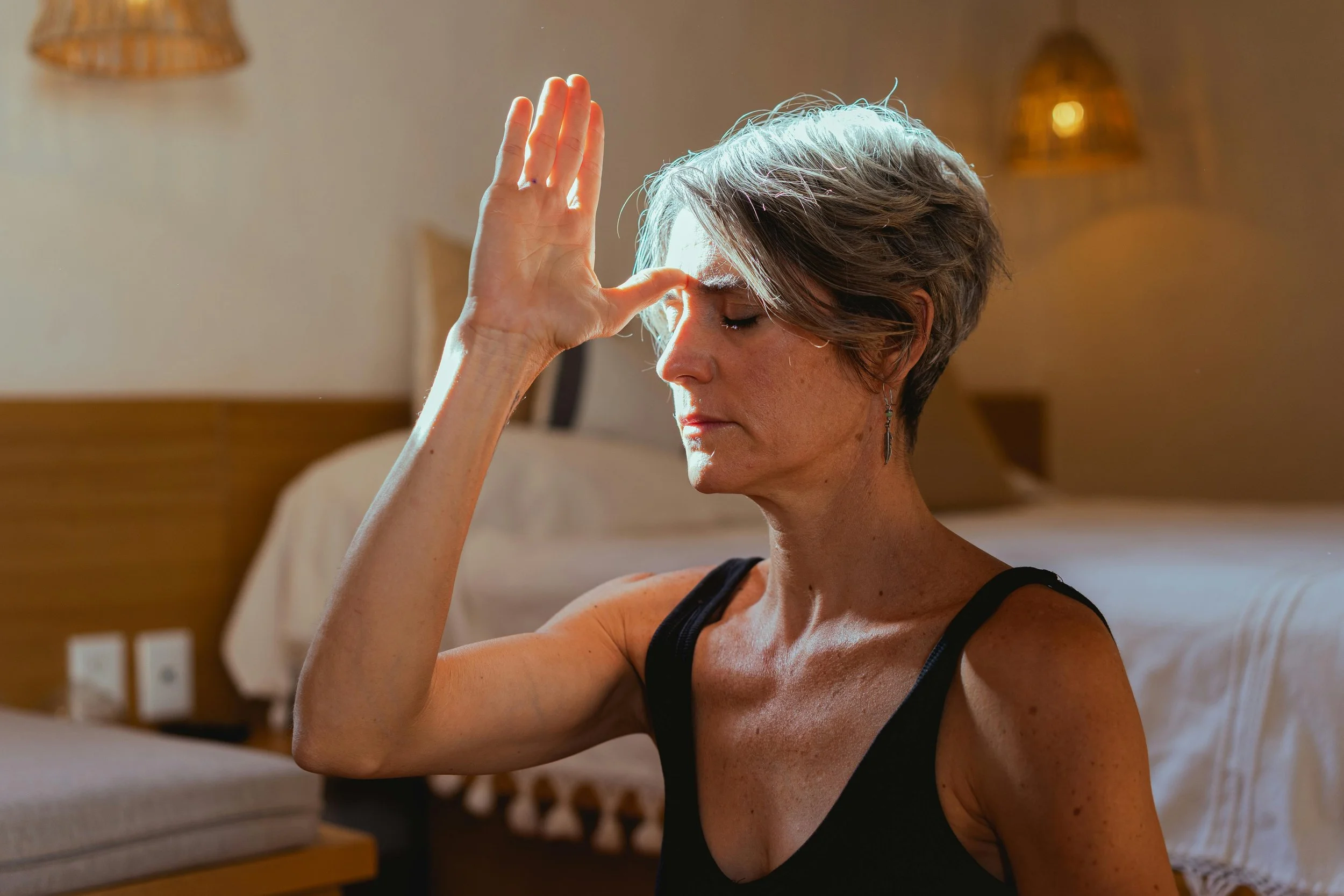
The clicking in my hips some mornings is still there, very occasionally. I notice it now instead of pushing past it. And more often than not, when I slow down enough to listen, it has something useful to say.
That's where I'd suggest starting. Not with a new program or a stricter schedule.
Just with the willingness to actually feel what's happening while you move.
Everything else builds from there.

If you've been doing yoga but don't feel like you're actually getting stronger, that's not a you problem. 👇👇
It usually means there's no real structure behind what you're doing, so nothing accumulates, nothing sticks, and every few weeks you're starting over from the same place.
These programs are built differently. Simple, repeatable structure designed to build strength, support consistency, and help you feel more capable in your body. Specifically if you're in midlife and done with the guesswork.