Yoga Poses for Back Body Strength {And What Most Classes Miss}
Yoga is often described as a perfectly balanced practice.
Mind and body. Yin and yang. Strength and flexibility.
Breathe in, breathe out, you know the drill.
And honestly? That promise is part of what draws so many of us in.
But when I started slowing down enough to reeeeally notice how yoga classes are sequenced, especially vinyasa and Ashtanga yoga, something felt… incomplete.
Because when you zoom out and look at the movement patterns we repeat again and again, most classes quietly favor the front of the body.
Lots of folding. Lots of pushing. Lots of reaching forward.
And the back body, the muscles that help you stand upright, support your spine, carry you through daily life, often gets very little attention.
Often undertrained, sometimes ignored for years.
Where the Imbalance Comes From
This really clicked for me when I started studying yoga through a more anatomy-informed lens {shoutout to teachers like Jason Crandell for sparking that curiosity}.
Traditional yoga practices give a lot of emphasis to pushing actions.
Think about how often we:
Lower through Chaturanga Dandasana
Press into Upward-Facing Dog
Push the mat away in Downward Dog
Load the arms in arm balances and inversions
>>> CHATURANGA DESERVES A SPECIAL MENTION HERE.
It’s one of the most repeated movements in modern yoga, and also one of the most misunderstood. When it’s rushed or performed without proper support, it often reinforces the very shoulder and back-body imbalances many students are already dealing with.
If you want a deeper, shoulder-safe breakdown of how Chaturanga is meant to work, and how to practice it without pain, I walk through that in detail here: → Chaturanga Dandasana: The Ultimate Guide to Mastering This Foundational Pose for Shoulder Strength, Safety & Flow
All push-based actions.
These poses aren’t the problem. The issue is what isn’t happening alongside them.
Pulling actions, the ones that stabilize the shoulder blades, support the rotator cuff, and keep the upper back from collapsing forward, are far less common.
And it’s not just the shoulders. The glutes. The hamstrings. The deep muscles that support the spine.
They often stay quiet.
Here’s an example most of us know well.
🧠 A classic Sun Salutation A:
You fold forward.
You take a halfway lift (often briefly, sometimes passively).
You lower through Chaturanga.
You move into Upward Dog.
You press back to Down Dog.
And then you do it again. And again. And again.
When you break it down, that’s roughly 5x flexion or push dominant actions for every 1x extension-based movement.
Over the course of a full 60-75 minute yoga class, practiced multiple times a week, for years, we’re not just moving.
We’re reinforcing a pattern.
How This Shows Up {Even If You’re “Strong”}
This is where things can feel confusing, especially if you’ve been practicing for a long time.
You might recognize some of this:
🧐A low back that always feels tight, no matter how much you stretch it
🧐 Shoulders that round forward even when you’re trying to “stand tall”
🧐 A practice that feels good in the moment but doesn’t seem to translate into feeling stronger day to day
It’s easy to assume this is just aging, or posture, or something you’re doing wrong.
But often, it’s simply imbalance. Overworking the front of the body. Undertraining the back.
Stretching tissues that are already long while asking stabilizing muscles to show up without ever giving them proper training.
That’s the imbalance in action.
You Don’t Have to Quit Yoga {Promise}
Let me be very clear.
I LOVE yoga.
I PRACTICE yoga.
I TEACH yoga.
And with time and experience I’ve also learned that yoga isn’t always complete when it comes to building strength.
Especially in midlife, when the body starts whispering {or sometimes shouting}, something isn’t quite working anymore.
So here’s what I started doing differently, and what I now teach all my students.
….. and these small shifts? Total game-changers.
4 Ways to Support Back Body Strength in Your yoga Practice

1. Make Halfway Lift an Active Pose
Most of us go through the shape of Halfway Lift without actually engaging the muscles it’s meant to train.
We lift the chest a few inches, hang in our joints, and move on.
So instead of being a strength-building moment, it becomes a transitional placeholder.
When you slow it down and engage:
The muscles along the spine wake up
The hamstrings and glutes support the pelvis
The upper back helps hold you upright
✨ Try this: Reach your chest forward as if you’re lengthening the front of your body, gently draw the shoulder blades toward one another, and extend through the crown of the head.
Your spine stays long. Your muscles switch on, and your posture improves in real time.

2. Add a Lunge Before Plank
Many yoga flows move straight from standing or folding into plank or Chaturanga.
What often gets skipped is preparation.
Adding a lunge creates a necessary bridge. It gives your body a moment to organize, to engage the glutes and hamstrings, and to lengthen the front of the hips before you load the spine.
So instead of moving straight from Forward Fold to Plank, pause in a Lunge first.
That one intentional step changes plank from something you muscle through into something your body is actually prepared for, with your hips and glutes sharing the work instead of your low back bracing.
👉 Your glutes and hamstrings turn on, instead of your low back doing all the work
👉 Your hip flexors lengthen, so your pelvis isn’t being yanked forward
👉 Your core and pelvis feel supported instead of compressed
That’s why lunges aren’t just “leg work.” They prepare your back body to actually do its job.

3. Choose Backbends That Build Strength
I used to loooove Up Dog, until I realized I was mostly collapsing into my low back and skipping the muscles that are meant to support the spine.
Now?
When I linger in Cobra, pulse in Locust, or add simple pulling work like resistance band rows, my back body actually has to work.
Instead of relying on flexibility or momentum, I’m building the kind of strength that helps me stand, bend, and move through my day without my back or shoulders taking the hit.
✨ Pro tip inspired by Jenni Rawlings: Adding simple pulling movements, like resistance band rows or even reverse table/Purvottanasana, can help restore shoulder balance that yoga often misses.
And no, it’s not “cheating” to bring a prop into class. It’s evolution.

4. Train Shoulder Extension
Almost every pose in any yoga flow has your arms overhead: Warrior I, Chair, Down Dog. Handstand, etc…
But how often do your arms move behind your body?
✨ Pro tip inspired: In a Halfway Lift or Lunge, let your arms reach back alongside your hips. Palms face down. Fingers extend long. This simple shift invites the upper back to engage, the muscles that support your shoulders and help you stay upright.
Instead of just moving through a familiar shape, you’re giving your body the opportunity to build strength, control, and stability that carries beyond the mat.
This Is About Support, Not Perfection
This isn’t about fixing yourself or doing yoga better.
If your back feels tired by the end of the day, or your shoulders slump even though you stretch regularly, it doesn’t mean yoga isn’t working for you.
It simply means some of the muscles that support your posture and spine haven’t been trained to share the load.
You don’t need to do more.
You just need to start strengthening the parts of your body that support you when you’re standing, sitting, carrying, and living your life.
It’s not because you’re doing anything wrong.
Traditional yoga simply wasn’t designed to build strength evenly throughout the body — especially in the muscles that help you stay upright, supported, and steady throughout the day.
This isn’t about doing more yoga. It’s about widening the lens of what strength actually means.
When the back body is supported, the hips, the upper back, the muscles that keep you upright, the practice starts to feel less effortful and more sustainable.
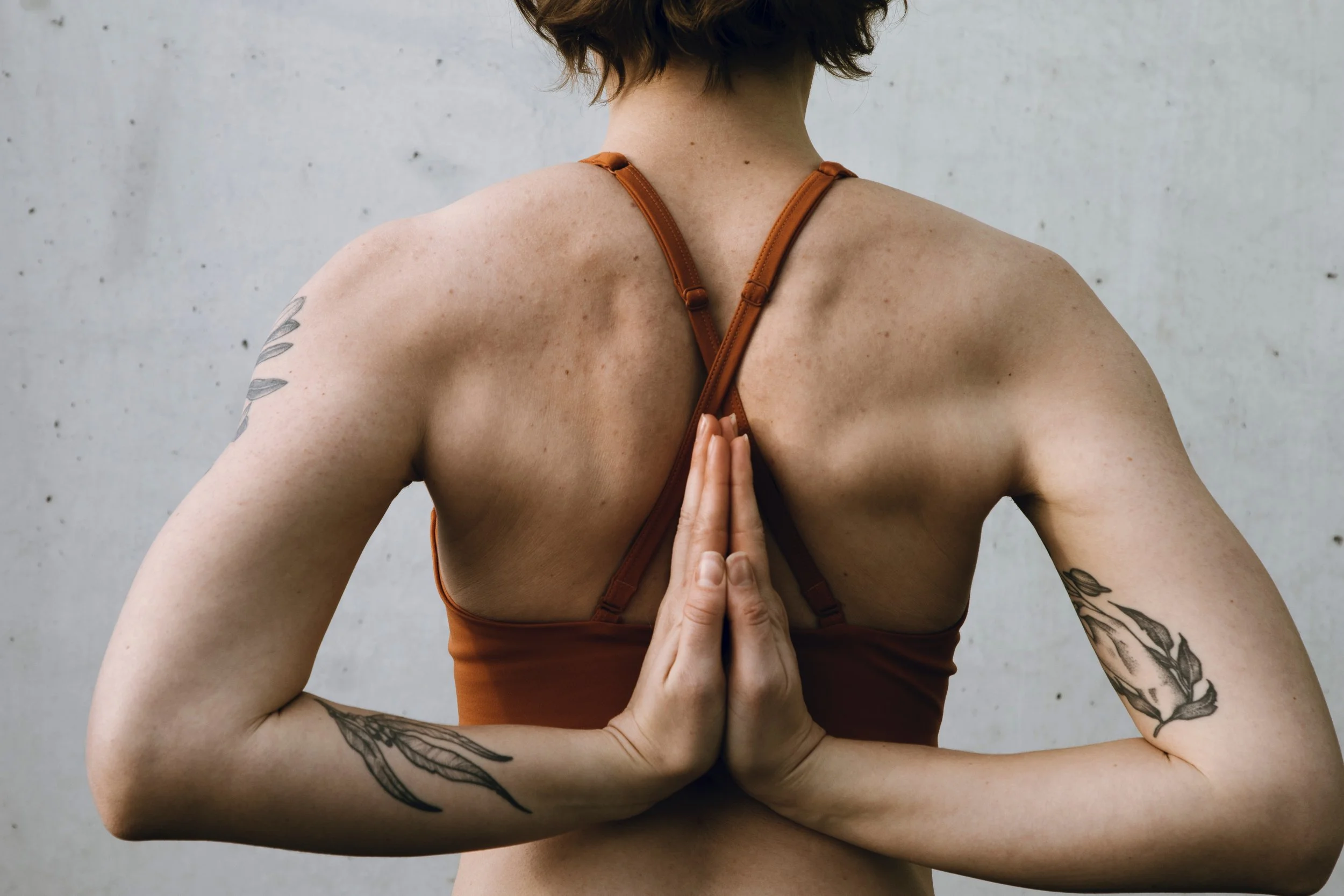
Strength yoga series
If this all resonates, if you’re realizing that your body isn’t asking for more yoga, but for a different kind of support, you’re not alone.
Strength feels different in your 40s.
Recovery takes longer. Flexibility doesn’t automatically equal stability. And practices that once worked don’t always meet the body where it is now.
This is a 5-part, repeatable strength-building yoga series designed for women 40+ who want to feel:
less stiff
more stable
stronger through the core and hips
steadier in balance
supported in their joints
confident in their body again
Not by doing more, but by doing what actually works now. Just thoughtful, structured yoga that builds strength over time, the kind you can feel off the mat, in real life.