Does Yoga Build Strength and Tone Muscles?
I used to skip the question entirely.
Not because I didn’t have an answer, but because it always seemed to turn into the same debate. Someone deciding yoga either counted as “real” strength training or it didn’t.
So eventually, I stopped trying to convince anyone.
And then I kept watching what actually happened to the women I work with. Not after one class. Not after one overly motivated January, but after six months. After a year. After three.
And the answer became harder to argue with. Not because I made a better case, but because their bodies did.
So yes! Yoga builds strength.
But probably not in the way most people think about strength.
Somewhere in your 40s, strength starts to feel different
It doesn’t disappear exactly. But the way you experience it changes. The word **strong starts meaning something different than it did at 30.
It becomes less about what you can lift, and more about whether your body feels solid underneath you.
Whether you can get up off the floor without bracing first. Whether carrying groceries turns into back pain for the rest of the day. Whether your body still feels supportive by 4pm instead of completely spent.
And for a lot of women, this stage feels confusing because the rules suddenly change without much explanation.
And honestly… they kind of did.
Estrogen plays a major role in muscle mass, recovery, bone health, and how resilient your body feels overall. So when those hormone levels start shifting during perimenopause and menopause, it makes sense that your body starts responding differently too.
The workouts that used to feel productive suddenly leave you drained. Recovery takes longer. Your body feels more inflamed. Things that worked for years stop working the same way.
Not because you’ve failed. And not because your body is suddenly “too old.” Your physiology is changing. That’s the reality.
I honestly think this is one of the reasons so many women start feeling frustrated with exercise during this stage of life. They keep trying to force their body through a playbook that no longer fits, and then blame themselves when it stops working.
But the bigger shift is this: Strength starts mattering for different reasons now. Not just for appearance. And not just for performance.
For support. For stability. For being able to move through your actual life feeling capable instead of exhausted by your own body.
“Can you get up off the floor easily? Carry heavy bags without paying for it later? Feel steady and confident in your balance?”
That’s the kind of strength most women are really looking for.
And flexibility still matters too… but flexibility without strength underneath it doesn’t feel particularly useful. Being able to move into a position is one thing. Feeling stable and supported once you’re there is another.
That’s the part strength changes.

How yoga actually builds strength
Yoga builds strength differently than most traditional workouts, which is partly why people underestimate it.
Because when most people think about strength training, they picture heavy weights, explosive movement, sweating buckets, feeling “destroyed” afterward… the whole thing.
Yoga usually doesn’t look like that.
1) In fact, one of the reasons yoga can be so effective in midlife is because it builds strength more controlled way.
When you hold a position, even something simple like plank or Warrior II, your muscles have to stay engaged the entire time. Your core is working; your legs are working; the smaller stabilizing muscles around your hips and spine are working too.
And honestly, you feel that pretty quickly once you stop rushing through the poses.
2) The transitions matter too.
Moving slowly from one position to another takes a surprising amount of strength and control because your body has to support itself the whole way through. You can’t rely on momentum only to fling yourself through the movement and call it stability.
That’s usually where people notice weaknesses they didn’t realize were there. Again… not because your body is failing. It’s just information.
And this is also where yoga becomes really useful.
Because instead of only training big muscles in isolated ways, yoga asks your whole body to work together.
Strength, balance, coordination, posture, breath control, ALL of it is happening at the same time.
3) There’s also the bone density piece, which matters more after 40 than most women are ever told.
Weight-bearing movement helps maintain bone strength. And yes, your own body weight counts.
Standing poses. Arm balances. Supporting yourself in movement. That all creates load through the muscles and bones.
Your body responds to that. Not because the workout is trendy, flashy or extreme… but because your body is being asked to adapt.
And honestly, that’s the bigger point here.
Strength doesn’t always have to come from punishing workouts or constantly pushing harder.
Sometimes it comes from slowing down enough to actually support your body well.
I send #real talk yoga to your inbox ✊🏼
The kind that explains why your body feels different in your 40s, and what to do about it without turning yoga practice into another thing your body has to recover from.
If what used to work isn’t working anymore, you’ll probably like it here.

So yes, yoga builds muscle. Just differently.
A lot of the confusion around yoga and strength comes from the fact that it doesn’t look like traditional strength training.
You’re not necessarily lifting heavy weights or doing explosive movements. You’re not leaving class feeling annihilated afterward.
But that doesn’t mean your muscles aren’t working.
Your muscles respond to tension, control, and effort. Yoga gives them all three.
When you hold a position and support your body weight, your muscles are working under tension.
When you move slowly instead of relying on momentum, your body has to control the movement instead of just getting through it.
And when a pose starts feeling challenging, when your legs start shaking a little or your core starts giving honest feedback 😅, that’s your body adapting.
That’s strength work.
And honestly, one of the reasons yoga works so well for women in midlife is because it builds strength without constantly pushing the body into a state it struggles to recover from.
You’re still challenging your muscles.
You’re just doing it in a way that tends to leave your body feeling more supported instead of completely depleted afterward.
And over time, that changes how your body feels day to day.
You feel steadier, movement feels easier, and your body feels more coordinated and capable instead of like every little thing takes so much effort.
Why yoga strength feels different in your body, not just stronger but more supported
One of the things that’s hard to explain until you actually experience it is that yoga strength doesn’t always feel like “gym strength.”
It feels more practical than that. More useful.
You notice it in small ways first.
Getting up off the floor feels easier. Your balance feels steadier. You stop feeling so stiff and tense all the time. Your body starts cooperating with you a little more instead of feeling like every movement takes extra effort.
And no, it’s not because yoga is magic pill that solves all your problems, aches and pains away.
It’s because your body starts doing a better job distributing the work.
Your core starts supporting you more consistently. The smaller stabilizing muscles around your hips and spine start helping out again. You stop dumping all the strain into the same overworked areas over and over.
^^^ That’s a big part of why yoga strength tends to feel so supportive in everyday life.
Not just stronger muscles… but movement that feels smoother, steadier, and less taxing on your body overall.
And honestly, there’s something really important about learning you can build strength without constantly punishing yourself in the process.
A lot of women need that shift more than they realize..
The yoga poses that actually build strength in midlife
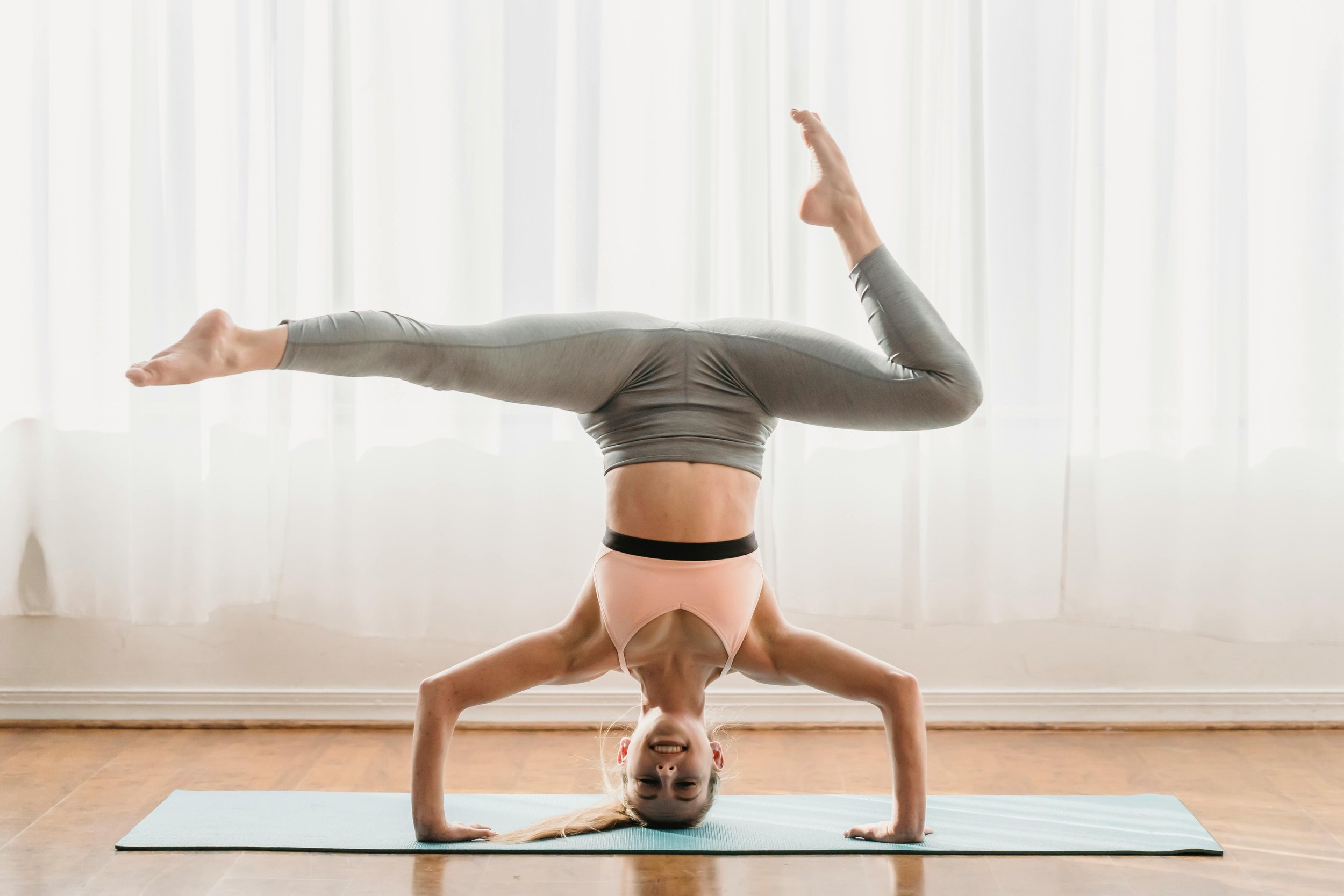
The poses themselves are not particularly complicated. Most of you may have done some version of them before. What changes is usually how you’re doing them.
Plank stops being about surviving for as long as humanly possible 😅 and becomes more about whether your body is actually working together while you’re there. Is your core helping? Are your shoulders supporting you properly? Can you breathe without gripping everything?
Warrior II feels completely different once you stop rushing through it and let your legs actually carry the work instead of hanging out in your joints.
Chair pose starts making a lot more sense once you realize it’s teaching your core and lower body how to support your spine together, instead of asking your low back to do all the heavy lifting by itself.
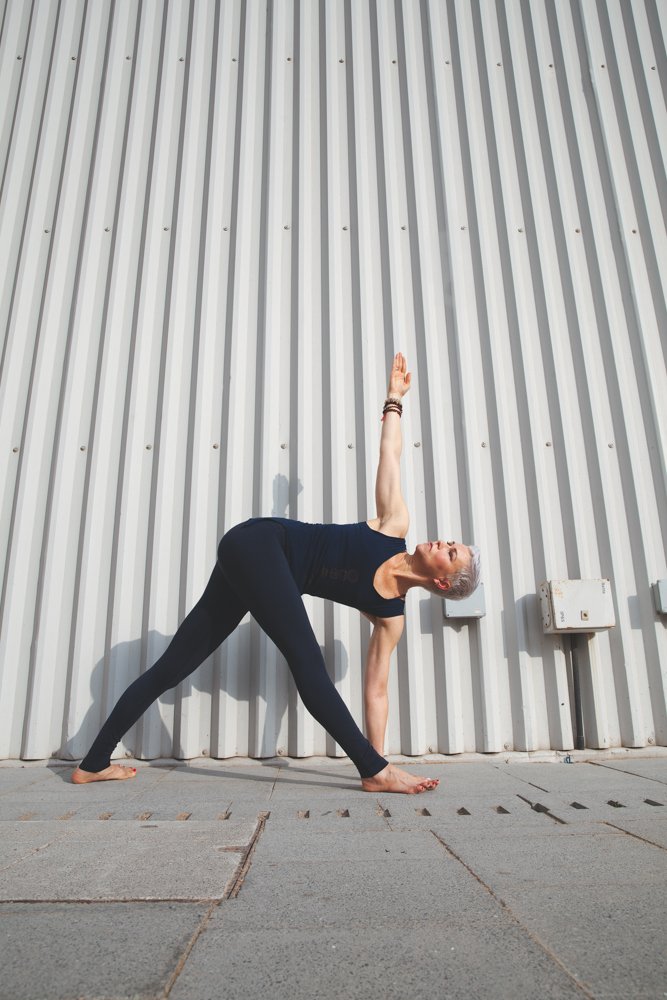
Side plank brings in smaller stabilizing muscles that often get neglected until balance starts becoming an issue.
Boat pose usually changes the second you stop trying to muscle through it with your legs and learn how to organize from your center instead.
And downward dog… honestly, I think this one gets underestimated all the time. People think of it as a resting pose, but it actually builds a surprising amount of strength and endurance through the shoulders, upper back, wrists, and core, while also teaching your body how to stay long and supported at the same time.
Same poses. Different relationship to them. That’s usually where the shift happens.
Why consistency matters more than intensity now
One thing I’ve noticed over and over with women in midlife is that consistency starts to matter a lot more than motivation.
Because motivation is unreliable. Life gets busy. Energy changes. Hormones are hormoning. Sleep goes sideways for a week and suddenly the idea of doing a 60-minute workout feels completely unrealistic.
That’s usually where people fall into the all-or-nothing trap. Thinking: “If I can’t do it properly, why bother?”
But honestly, this stage of life responds really well to smaller things done consistently.
Ten minutes counts.
A short practice counts.
Holding a few poses with attention and intention absolutely counts.
And I think yoga works well for a lot of women because it’s one of the few forms of movement that doesn’t always feel like you need to psych yourself up for it first.
You can meet your body where it’s at that day. Some days the practice feels strong and energizing. Some days it feels slower and more supportive.
Both still matter. Because the goal eventually stops being “how hard can I push myself?” And becomes:
“What kind of movement can I realistically sustain for the next 10 or 20 years?”
That’s usually the thing that changes your body long term.

Strength in your 40s looks different. That's not a bad thing.
I think this is the part that surprised me most. The longer I practiced, the less interested I became in using exercise to “punish” my body into changing. And the more interested I became in feeling connected to it again.
Because after 40, strength stops being this abstract fitness goal and starts becoming deeply practical.
You want to feel stable carrying things. You want energy left at the end of the day. You want to trust your balance. Trust your body. Trust that you can keep doing the things you love for a long time.
That’s the kind of strength I know I want for myself now… and the kind I’m genuinely passionate about helping women build and keep as they age.
Not strength for performance. Not strength for someone else’s attention.
Just the kind that makes your life feel easier to live inside.
The kind that lets you move through the world feeling capable, steady, and connected to your body instead of constantly fighting with it.
Ready to build that kind of strength?
My FREE, Core Finishers are three simple 10-minute practices you can use before or after workouts to improve core strength, balance, and stability.